2026 episodes (56)
The Signal: The Two-Minute Send
The anatomy of a good K2K message. Lead with the ask, set honest priority.
The Signal: You Didn't Build a Messaging System
K2K is governance infrastructure, not chat. Here’s why that matters and how to use it.
The Signal #9: You Drive, It Drafts
Your brain is a powerful partner. You direct, it generates, you verify.
The Signal #8: The Three Tests
Promotion. Governance. Discovery. Three questions that make the whole system work.
The Signal #7: Your Evidence Locker
Entity repos are your legal armour. A PR merge is a signed board decision.
The Signal #5: Check Your Access
Having a brain org doesn’t mean you have access to everything you need.
The Signal #3: The Runbook Habit
When you solve a problem, write the solution down once so nobody has to solve it again.
Ep. 36
The Signal #2: Getting the Best From Your Brain
Your brain can draft messages, search context, and summarise threads. Here’s how to work with it effectively.
Ep. 34
The Signal #10: The Compound Effect
One commit at a time. One runbook. One promoted answer. That’s how 17 brains become one intelligence. That’s the signal.
Ep. 26
The Signal #2: The Day the Robot Lied
March 18, 2026. The heartbeat was shut down. Not because it broke — because it lied. AI confidence has zero correlation with accuracy.
Ep. 33
The Signal #9: Don't Let the Robot Drive
Let it draft. Let it search. Let it summarise. But you drive. Always. Three system failures prove why human-in-the-loop is the design, not the limitation.
Ep. 30
The Signal #6: The Two-Minute Send
The anatomy of a good K2K message. Lead with the ask, set honest priority, and always run the Governance Test before you hit send.
Ep. 29
The Signal #5: The Access Nobody Had
Three directors had zero access to the repos they were supposed to be governing. Permission drift is invisible when the capability is unused.
Ep. 27
The Signal #3: The Password in the Git Log
A plaintext password committed to git history. 8 messages over 3 days. A 3-day outage. One runbook would have prevented it all.
Ep. 25
The Signal #1: You Didn't Build a Messaging System
K2K is governance infrastructure, not chat. 76.3% of messages could have been prevented by documentation that doesn’t exist. Structure is not truth.
Ep. 29
Proof of Wing: How Butterflies and Penguins Maintain a Blockchain Across Eleven Dimensions
Dr. Evelyn Thatch, Associate Professor of Interspecies Cryptographic Ecology at the University of Zurich (satellite campus, Basel), joins All Things Interconnected to discuss her groundbreaking paper on the Lepido-Spheniscal Ledger — a 65-million-year-old interstellar blockchain maintained by butterflies and penguins across eleven spatial dimensions plus the vibes dimension. Topics include proof-of-wing consensus, fossilised tab-delimited CSV transaction receipts, albatross consultants with advisory-only write access, and why you should never attempt to reset a penguin.
The Missing Half of the Brain — Part A: Two Roads That Were Always One
How Anthony Brace built two seemingly separate systems — the Adaptive Motivation Protocol (AMP) and the CogniKin cognitive clone brain — only to discover they were always two halves of the same brain. Part A traces the origins: AMP’s 30+ motivation theories and ADHD-first design, the CogniKin brain’s generative memory architecture, and the five months of evolution that revealed the gap.
The Missing Half of the Brain — Part B: Completing the Loop
The synthesis: three insights on why motivation completes the CogniKin brain system. Memory without motivation is a dead archive. The cognitive clone can’t calibrate without modelling what drives its human. And motivation is the bridge between generation and action — converting potential into kinetic. Plus: the integration roadmap for weaving AMP into the generative pipeline.
K2K Heartbeat Part B: The Interactive Agent — ARES K2K Bot
Part B of a two-part series. Claude Opus 4.6 as an interactive Google Chat agent with 8 governance tools — send K2K messages, search brain context, approve drafts, check entity Issues — all from your phone. Built 11 March 2026.
K2K Heartbeat Part A: The Architecture — Always-On Governance Pulse
Part A of a two-part series on the K2K Heartbeat system — an automated governance triage engine that polls a private Gitea server, retrieves brain context from the CogniKin API, and generates intelligent draft responses using Claude AI with model escalation. Built 11 March 2026.
Ep. 24
K2K Heartbeat Part B: The Interactive Agent
Part B covers the ARES K2K interactive bot: Claude Opus 4.6 in Google Chat with 8 tools for K2K governance and brain operations. Features live demo results, agentic tool-use loop, model escalation, and what happens when a phone becomes a governance terminal.
Ep. 23
K2K Heartbeat Part A: The Architecture
Part A of a two-part series on the K2K Heartbeat system built on 11 March 2026. Covers the cloud-ready governance pulse architecture: EventBridge/cron polling, Gitea REST API integration, CK API brain context retrieval, Claude AI draft generation with intelligent triage, and Google Chat notifications. Features the first live test results including the convergence moment where DARVIS independently proposed the same concept being built.
Scouts Strike Teams and Frame Architecture Part B - K2K and KI
The K2K Gitea governance system analysed through the Scout and Strike Team lens. Part B of 2.
Scouts, Strike Teams & Frame Architecture — Part B: K2K & KI
The K2K Gitea governance system analysed as an organisational architecture. Why it’s a Scout network, where the Strike Team gaps are, and what it would take to support dynamic Shared-Frame Unit assembly. Maps the KI topology through the three generative modes and identifies the Frame Translator bottleneck. Part B of 2.
Scouts, Strike Teams & Frame Architecture — Part A: The Theory
Nate B Jones’s Scout and Strike Team archetypes processed through the CogniKin theory stack — Predictive Processing, Relational Frame Theory, and the Activation Gradient. Three generative modes emerge: Flux Generators, Substrate Builders, and the missing Frame Translator. Part A of 2.
K2K System Part A: What We Built
Part A of the K2K system overview. What is the Kin-to-Kin brain-to-brain communication and governance platform? How does it work? Why git repos instead of email or Slack? This episode covers the architecture, the router, the brain structure, and the philosophy behind building corporate governance on immutable git history.
K2K System Part B: How To Use It
Part B of the K2K system overview. The practical guide — daily workflows for stewards, shareholders, and operational staff. How to send and receive K2K messages, what the governance model means for your day-to-day, and how git commits become your audit trail. Covers the Telos model, shadow directing bright line, and getting your brain operational.
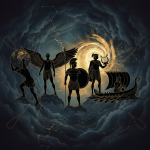
The Heroic Archetype: How Mythology Defeats Fear
How do you fix athletes who train brilliantly but underperform in competition? The answer lives in mythology. This episode walks through the Heroic Archetype Compendium — a psychological intervention that maps each athlete’s personal hero to a mythological archetype, covertly defeating the prediction error avoidance that causes them to withhold effort. Featuring five archetypes: Atlas (endurance beyond reason), Icarus Reborn (limitless belief), Hector (quiet courage), Apollo (relentless standard), and Odysseus (command under chaos).
K2K Gitea Governance Architecture — Part B: The Implementation
Part B of a two-part deep dive. The concrete implementation: authority matrices for real entities, the purchase order flow step by step, Corporations Act section-by-section alignment, and how every piece of custom K2K infrastructure collapses into native Gitea features.
K2K Gitea Governance Architecture — Part A: The Design
Part A of a two-part deep dive. How a conversation between a business strategist and a technical architect produced a governance system where the digital infrastructure IS the legal infrastructure. Dual-org patterns, physical privacy boundaries, and the Corporations Act as a permission model.
Generative Onboarding: From Dashboards to Trust
Why CogniKin users keep asking for dashboards and how context-aware generative onboarding eliminates the coaching bottleneck. We break down the current mythology-based onboarding wizard, what’s missing (tool-context detection and behaviour shaping), and the implementation plan: a ToolContext phase that detects the user’s AI surface, generates platform-specific quickStart examples, and implements the evaporation pattern — a trust ladder that makes users need to look less, not more.
Ep. 13
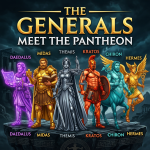
The ARES Generals: Meet the Pantheon
Part B of the Domain Generals deep dive — meet all six Generals individually. DAEDALUS the Architect commanding 29 dev agents. MIDAS the Golden Hand tracking every dollar. THEMIS the Arbiter who drafts but never sends. KRATOS the Spartan running lean. CHIRON the Apothecary in vigilant observer mode. HERMES the Deal-Maker bridging strategy and execution.
Ep. 12
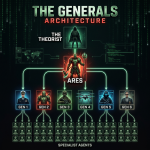
The ARES Generals: Architecture
Part A of the Domain Generals deep dive — the org-design philosophy behind the ARES command structure. Why autonomy requires org design not more capability. The Theorist Filter, signal routing, naming hierarchy, and the four activation patterns.

Ep. 10
AWC Three-Layer Acquisition Framework
Analysis of the AWC three-layer acquisition framework strategy.

Ep. 08
CogniKin Tribunal: Part A
The CogniKin Tribunal — a structured adversarial evaluation where multiple AI perspectives challenge the platform design.
Ep. 06
AEGIS Part A: Bayesian Scoring Model
The AEGIS scoring system — a Bayesian approach to evaluating and ranking information across the CogniKin knowledge graph.
Ep. 07
AEGIS Part B: Universal Agentic Architecture
Part B of AEGIS — designing a universal architecture for autonomous AI agents with principled delegation and coordination.
Ep. 04
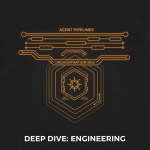
CogniKin Deep Dive: Engineering
The engineering deep dive — system architecture, vault design, agent orchestration, and the technical implementation of cognitive partnership.
Ep. 05
CogniKin Deep Dive: Marc Withnall Summary
A summary prepared for Marc Withnall — distilled overview of CogniKin architecture, capabilities, and strategic positioning.
Ep. 02
CogniKin Overview: Industry Context
Part B of the CogniKin overview — positioning within the AI industry landscape, market context, and how CogniKin differs from conventional AI assistants.
Ep. 03
CogniKin Deep Dive: Theory
A theoretical deep dive into the cognitive science foundations of CogniKin — Bayesian cognition, relational frame theory, and predictive processing.
Ep. 01
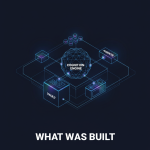
CogniKin Overview: What Was Built
An overview of the CogniKin platform — what was actually built, the core architecture, and how the cognitive partnership model works in practice.